





There’s nothing Cameron McDonald doesn’t know about pumps.
From submersible and sewer bypass pumps to installing complex dewatering systems, the United Rentals Pumps Product Manager is the go-to for pump solutions for everything from construction sites and flood-prone areas to draining backyard swimming pools.
“At the end of the day, if you put the right pump in the right situation, you have a happy customer,” says Cameron. “They are the ones who tell their mates how good a job we did. That’s what we want, return customers and happy customers.”
United Rentals offers advanced pump solutions and installation, as well as supplying equipment for customers to do the job themselves, using products like electric submersible pumps and 4 and 6-inch trailer pumps.
“They come into the store, hook up the pump, take the gear to the job site and do everything themselves. These sorts of jobs include anything from pumping water from pools and site excavations, through to drainage works and bypassing.”
Specialist Expertise And Equipment
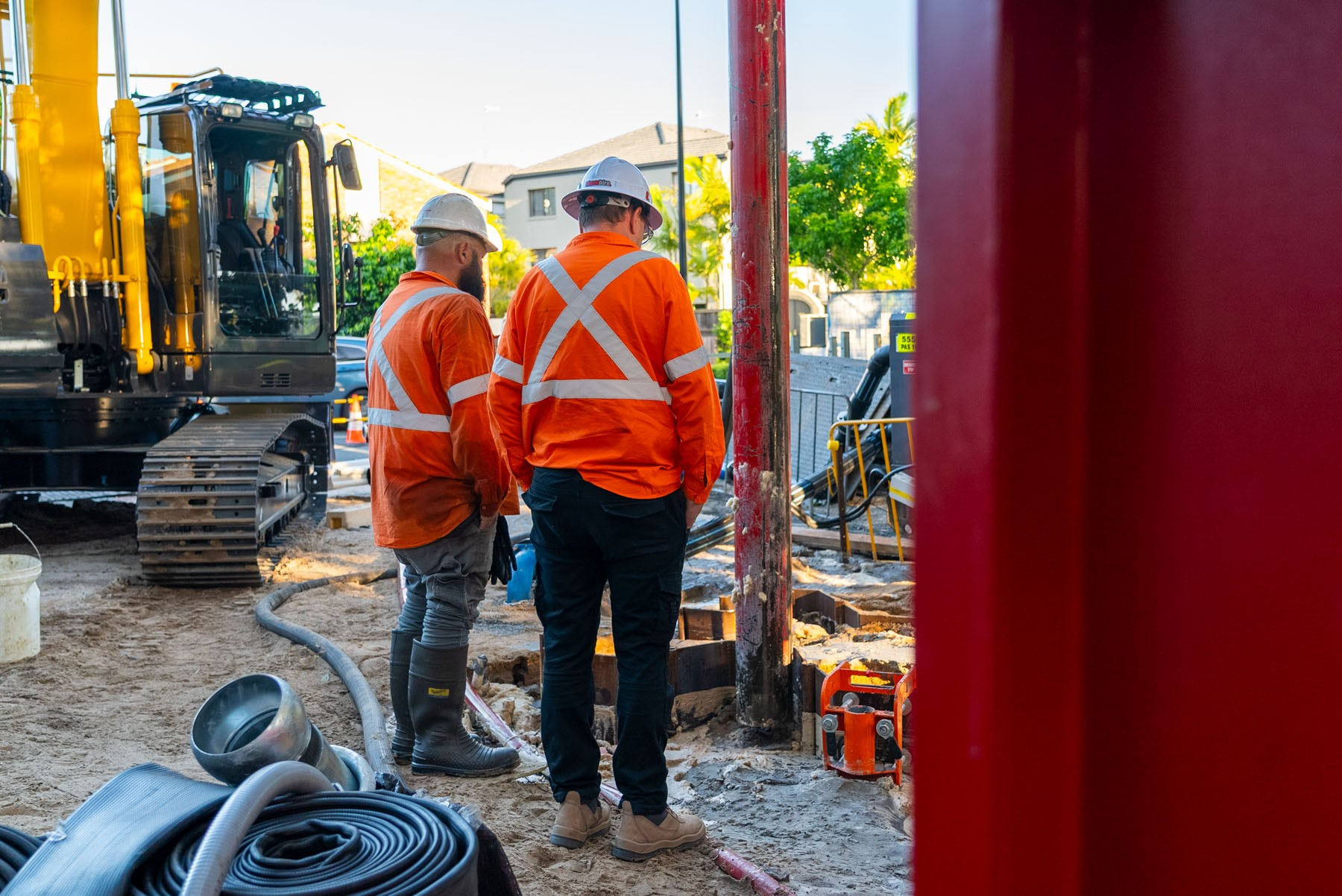
United Rentals supply and install pump solutions for more complex projects, such as on-site dewatering projects, basement dewatering, sewer bypassing, water transfer, and water treatment solutions. These jobs include moving water around, or disposing of water, on construction sites and pumping water out of footings.
“Depending on the site restraints, depth of water, amount of water, and the quality requirements of water, this could be a 3-inch Trash Pump, or a 4 or 6-inch pump, depending on the scale of the project.”
For sewer bypass pumping – during sewer line maintenance and upgrades or on construction sites involving sewer infrastructure – 4, 6, 8, and 12-inch pumps can be used.
“The benefit of sewer bypass pumps is to enable work to continue without disrupting communities and households,” he says.
Different pump scenarios require different pumps. This means working closely with customers to find out their specific needs.
Site inspections, flow rates, quantity and quality of water, reviewing geotechnical reports, site conditions, fluid to be pumped, are all taken into account when determining what type of pump and treatment is required on site.
“It’s all about asking the right questions and getting the right information to work out the best solution and pump to get the job done safely and efficiently for the customer.”
Next Level Pump Solutions
Dewatering pump installations, which safely and efficiently manage groundwater removal from a site, require specialist expertise, says Cameron.
“For dewatering, you wouldn’t just have anyone walk in the door and hire that sort of pumping equipment and do an install. It would end in tears.
“You need to know what is required, how to install it, how to treat the water prior to discharge, and then where you can discharge the water safely,” he says.
The dewatering process involves spears up to 6.5m being jetted into the ground, meaning preparation is key. Cameron and his team visit the site, review geological reports, and investigate what type of equipment can be used.
“If it’s suitable, we work out what size system is required, including what length of spears are needed, how big the area is, how long the install /dismantle will take, if water treatment is required and where water will be discharged,” he says.
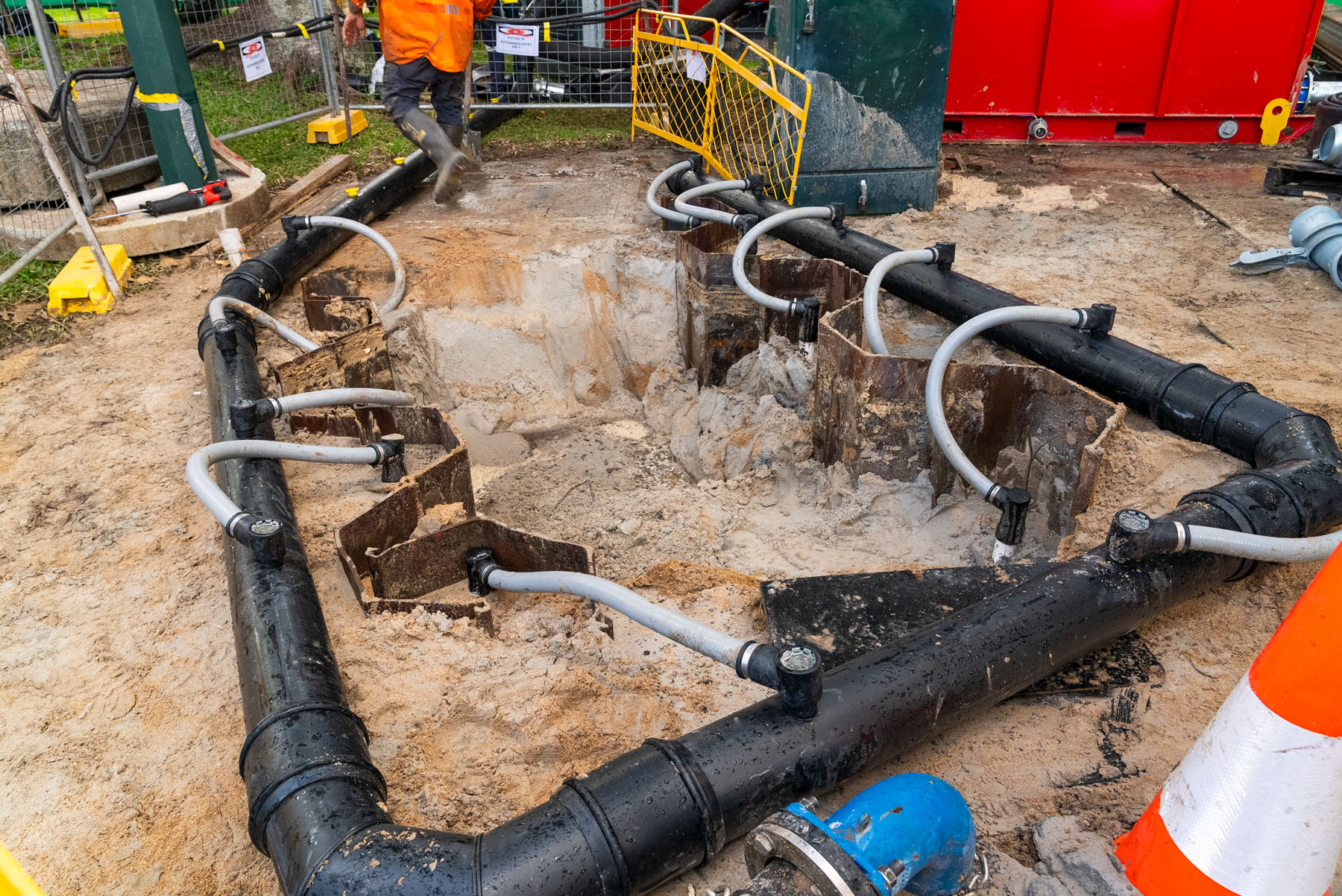
The dewatering process involves the spears being jetted into the ground using either hand jetting tools or jetting tubes. Both installations require the jetting tools/tubes to be connected to a high-pressure pump, then the jetting tools or tubes are lowered into the ground, as high-pressure water blasts sand or soil away as it sinks into the ground.
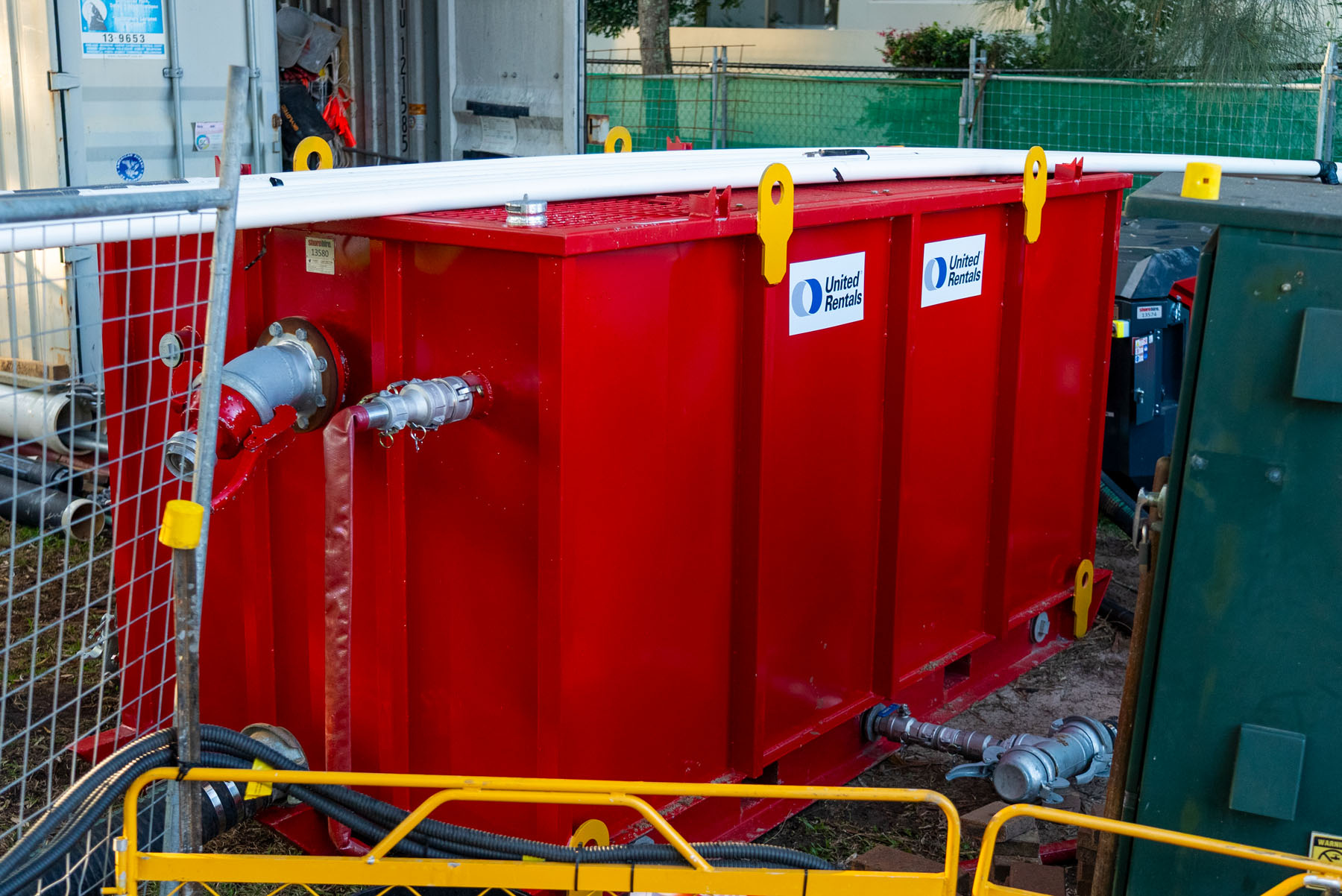
Once the jetting tube reaches the correct depth, the spears are inserted. A 5ml filter packing material is then spread around the spear, and the jetting tube is removed. The jetting spears are connected to a “head of pipe”, which is connected to a Piston Pump that extracts the water out of the ground and pumps it to a treatment tank before being discharged.
“Using a Piston Pump is beneficial because they can handle the air in the system better than a traditional, centrifugal pump. Piston Pumps don’t lose their prime, and they’ll just keep sucking away.
“They also have a smaller engine, so they can run for up to a week at a time on a tank of fuel. They are very economical.”
Expanding Pump Product Range
United Rentals continues to diversify and expand its pump range to meet customer demand, including different types and brands of pumps.
To ensure high-quality and efficient equipment is deployed, pumps are serviced every 250 hours and 500 hours, depending on the manufacturer’s specifications.
“We test the pumps and hoses every time they come back after being on hire to ensure they are running at the optimum next time they go out. That’s key because, like I say, it’s all about happy customers.”